A 40-ft container farm or a modular vertical farm? Here's how they compare on cost, capacity, flexibility and scaling — so you pick the right one.
AEROPONICS.FARM Engineering · Updated 2 August 2026
A container farm is a single, fixed, plug-and-play box — typically $30,000–110,000 — that ships anywhere and starts producing quickly. It's mobile and self-contained, which makes it ideal for pilots and remote sites, but its capacity is capped by the box.
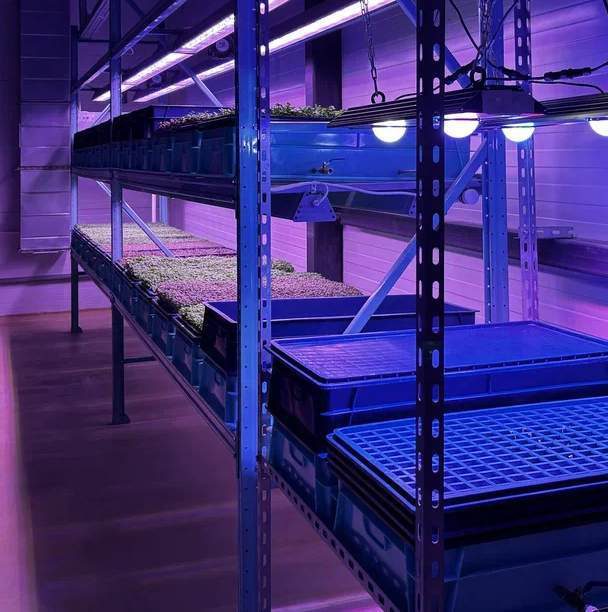
Modular vertical farms tile together into a right-sized facility, from a pilot to a hall, on one control system. They reach higher capacity and a better cost per kilogram at scale, and expansion is predictable — you know the output and cost of the next module before you build it.
Choose a container farm for a pilot, a remote or mobile deployment, or a fixed small volume. Choose vertical farm modules when you need volume, the best unit economics, and a clear path to scale.
A container is a fixed price for a fixed output; modules give predictable per-unit economics as you grow. Both are covered on our systems pages — and the cost guide breaks down the bands.
A container has a lower fixed price but capped capacity; modular vertical farms scale to a better cost per kilogram at volume.
A container farm or a single microgreens room is a low-risk pilot; scale with modules once the economics are proven.
Estimate payback for your crop and climate, then get an engineered quote within 24 hours.
Open the ROI calculator →