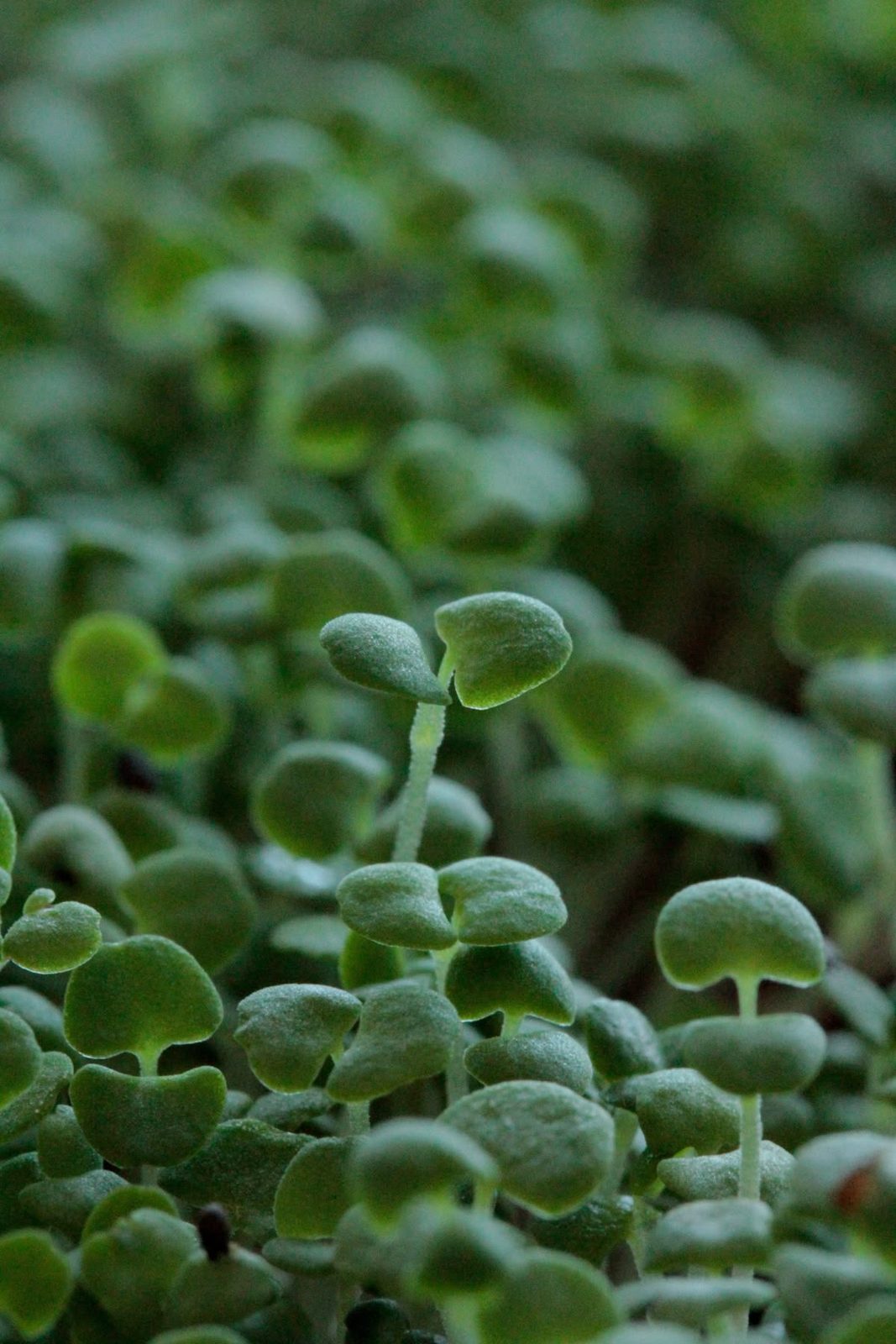
The broccoli-derived compound at the centre of chemoprevention research — and broccoli microgreens carry 10–100× more of its precursor than mature florets.
Glucoraphanin is a glucosinolate concentrated in young Brassica seedlings. When the plant tissue is damaged, the plant enzyme myrosinase converts glucoraphanin into sulforaphane, an isothiocyanate studied for antioxidant, anti-inflammatory, chemopreventive and neuroprotective activity through activation of the Nrf2 cellular-defence pathway.
Broccoli microgreens are among the richest known dietary sources of glucoraphanin, which makes them a strategic feedstock for standardized extract manufacturing.
| Broccoli microgreens | 10–100× glucoraphanin vs mature broccoli — Fahey et al., 1997 (Johns Hopkins) |
|---|---|
| 3–5-day broccoli sprouts | 20–50× glucoraphanin per gram vs mature florets |
| Kale, radish, mustard microgreens | additional glucosinolate profiles |
Studied in oncology, neurodegenerative and cardiovascular research programmes.
Broccoli extracts standardized to glucoraphanin / sulforaphane yield.
Antioxidant and skin-protection actives (Nrf2 pathway).
Young Brassica seedlings front-load defence compounds, so glucoraphanin runs 10–100× higher per gram than in mature florets — far less biomass for the same yield of active.
Yes — cultivar, light recipe and harvest day are controlled to hit a target precursor level, and we can supply to a specification.
Glucoraphanin is the stable precursor stored in the plant; the enzyme myrosinase converts it to the active sulforaphane when tissue is disrupted.
For B2B ingredient sourcing. Statements describe published research and third-party market estimates; they are not medical advice, and no health claim is made for any finished product. Market figures vary by source and are indicative.
Clean-label natural pigments and polyphenol antioxidants — concentrated in red and purple microgreens such as …
Explore →CarotenoidThe macular carotenoids behind the multi-billion-dollar eye-health category — concentrated in microgreens like…
Explore →Provitamin AProvitamin-A carotenoid and natural colorant — red cabbage and pepper-cress microgreens are among the richest …
Explore →AntioxidantBroad-spectrum plant antioxidants for nutraceuticals and cosmeceuticals — and controlled LED cultivation can r…
Explore →BrassicaThe parent family behind sulforaphane and mustard-oil actives — Brassica microgreens are dense in glucosinolat…
Explore →PigmentThe green pigment sold as a natural colorant and “green” supplement — microgreens are a dense, clean source of…
Explore →VitaminPhylloquinone for supplements and fortification — amaranth and Brassica microgreens are among the richest fres…
Explore →FlavonolA flavonol antioxidant of rising research interest — concentrated in kale, broccoli and radish microgreens.…
Explore →FlavonolOne of the best-selling bioflavonoids in supplements — a $1.6–1.8B market — and Brassica and allium microgreen…
Explore →Tell us the compound, target concentration and volume — we cultivate to spec and supply biomass, powder or extract-ready material.
Request a sample & spec →